

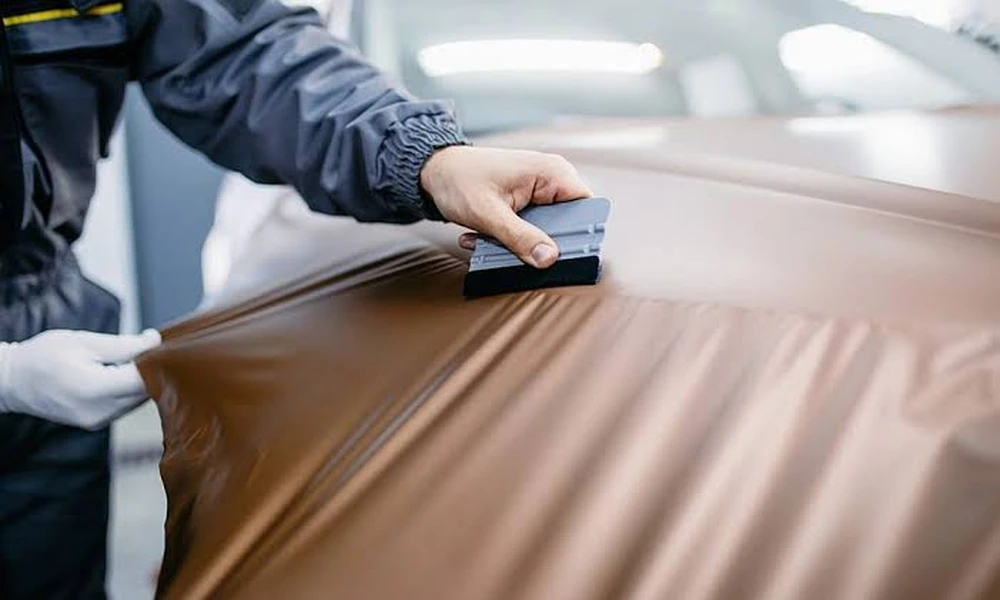
Existing paint protection film is worth understanding before you buy a used car, but its presence does not prove the condition of the paint or the vehicle. Ask what was installed, where it was fitted and which records are available. Keep the vehicle inspection independent of the film discussion, then decide after the purchase whether the existing coverage needs attention.
Treat the film as an existing accessory
A seller may mention paint protection film as a valuable extra, much like a set of wheels or a roof rack. That tells you something was added, but not necessarily how much of the car is covered or how it has been maintained. Look at the vehicle together and have the seller identify the protected areas. Avoid translating “the front is wrapped” into a detailed coverage plan without seeing what that phrase means.
View visible edges and surfaces in suitable light without picking at them. You are trying to understand the installation, not test its attachment with a fingernail. Note any area that looks different, cloudy or damaged and ask for an explanation. A photograph can preserve the observation for a later professional assessment. It cannot establish whether a mark belongs to the film, the paint beneath it or another material.
Do not let an attractive finish dominate the wider buying decision. Service history, vehicle condition and an appropriate inspection remain separate matters. A film installation is not evidence that previous repairs were minor, that a panel has never been repainted or that mechanical maintenance was completed. It may be one useful detail in the car’s history, but it cannot carry the evidential weight of those other questions.
Ask for records that describe the actual coverage
An invoice may identify the installer, installation date, film product and named coverage areas. Ask for a copy with unrelated personal details removed if necessary. A generic payment receipt is less informative than a description tied to this vehicle. If there are records of later replacement pieces, keep those with the original paperwork so the history does not appear more uniform than it really is.
Read any warranty information as a specific document. Do not assume that a long original term remains available to a new owner or that every kind of damage is included. Ask the issuer how any applicable transfer or registration process works. The seller’s recollection is a starting point, especially when the work happened years ago, but it should not become your only basis for assigning value to the coverage.
Missing paperwork does not automatically mean the film is defective. It does mean there are limits to what you know. Describe those limits plainly when considering the purchase: product unknown, installation date uncertain, or coverage only visually identified. This keeps a negotiable uncertainty from becoming an invented fact. You can still make a decision while recognising that some future questions may require an assessment rather than an invoice lookup.
Ask about the cleaning routine and any work performed over the film. The useful information is what was actually done, including any products or professional services the owner can identify. Avoid turning the conversation into an argument over the perfect maintenance method. Your goal is to give a future installer or detailer a more complete history if the surface needs attention.
Let inspection settle what the film cannot tell you
Tell the person inspecting the car that film is present and share the coverage information. Let them explain how that affects their assessment and whether another specialist should look at a concern. Do not ask the seller to remove sections casually to prove a point. Removal is its own professional decision, with implications that depend on the material, installation and underlying surface.
Keep the language of the inspection precise. “The covered panel looks consistent from this viewing position” is not the same statement as “the original paint is perfect.” A responsible evaluation distinguishes what can be seen from what remains uncertain. That distinction is useful even if you eventually buy the vehicle, because it stops your new ownership records from beginning with an unsupported assumption.
If an area requires further investigation, decide who will arrange it and when. A planned purchase date should not force you to accept an explanation you do not understand. Depending on the concern, you may seek more information, adjust your expectations or decide the car is unsuitable. These are ordinary buying choices. The existence of film does not require you to restore it immediately or excuse unresolved questions about the vehicle.
Choose a first ownership step after the sale
Once the car is yours, you can discuss an assessment of existing paint protection with a provider such as SRS Tints in Mississauga. Its published PPF offering describes coverage for different exterior areas. Explain that the vehicle already has film and ask whether the shop can assess the particular material and concern. The next step might be care advice, further inspection or a proposal for work; none should be assumed from the service category alone.
Resist the urge to replace everything simply to establish a fresh start. If the existing installation remains suitable, retaining it may match your priorities. If only part of it needs attention, ask what a limited intervention would mean for appearance and future care. A new installation can be considered on its merits rather than treated as an automatic consequence of buying somebody else’s car.
Create your own record with current photographs, the documents received and the questions still unanswered. Add the outcome of any professional assessment without rewriting the uncertain past. This is also a useful moment to obtain care guidance appropriate to the identified film. A routine based on a known product is easier to explain than one inherited as an informal collection of the former owner’s habits.
An honest folder may contain one line saying “installation date unknown.” Keep that line until evidence replaces it. A clear gap in the record is more useful than a confident story that later owners or service providers cannot verify.
