

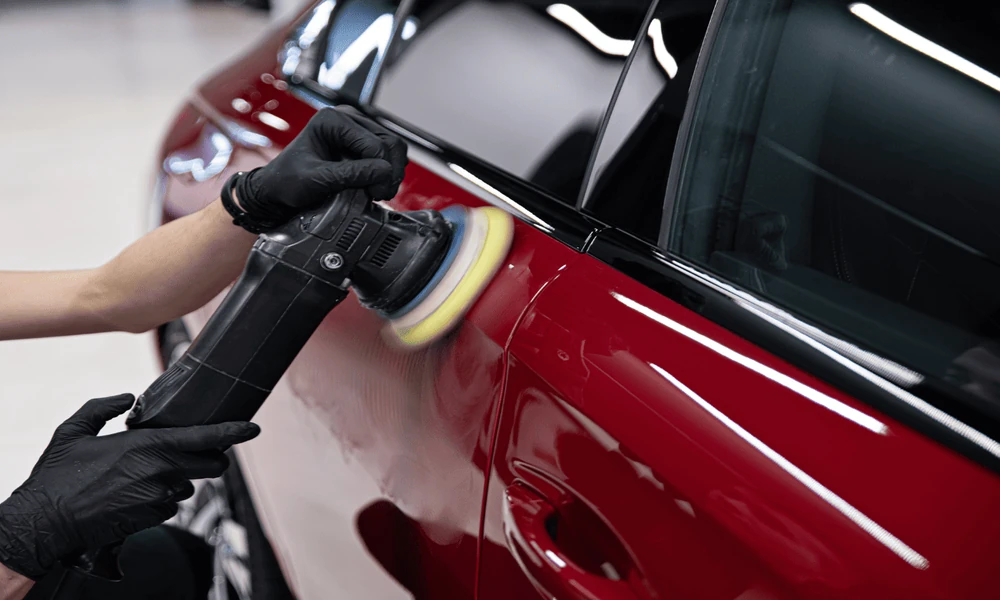
Paint correction is a professional detailing process that physically removes surface defects from a vehicle’s clear coat – things like swirl marks, light scratches, water spots, and oxidation – using machine polishers and abrasive compounds. The result is paint that reflects light more evenly, looks significantly deeper and glossier, and no longer carries the dull, hazy appearance that builds up on most cars over time.
If you have ever looked at your car in bright sunlight and noticed a web of circular scratches across the hood and roof, those are swirl marks – and paint correction is the only way to properly remove them. Springs Detailing has an in-depth resource on what is paint correction that covers the full process from a professional’s perspective.
The Short Answer: What Paint Correction Actually Does
Think of your car’s clear coat like a wooden floor. Over time, foot traffic leaves fine scratches across the surface that make it look dull. Refinishing the floor means sanding those scratches away until the surface is level again – bringing back the shine. Paint correction works on the same principle, except instead of sandpaper, it uses machine polishers with abrasive compounds, and instead of wood, it works on the clear coat sitting on top of your car’s color.
The key point: paint correction removes a tiny amount of clear coat material to eliminate defects. It does not add anything. It levels the surface by removing the peaks and valleys that scatter light (causing dullness) until all that remains is a smooth, reflective plane.
Why Does Car Paint Get Dull and Scratched?
Most paint damage comes from sources that seem harmless in the moment:
- Automated car washes – the rotating brushes contain abrasive grit from previous vehicles and scratch paint with every wash cycle
- Improper hand washing technique – using a single bucket, dirty sponges, or wiping with a dry cloth creates swirls instantly
- Parking lot contact – other car doors, shopping carts, jacket zippers, and backpack buckles all leave marks
- Environmental exposure – hard water mineral deposits, bird droppings, tree sap, and road salt all chemically attack the clear coat
- Automatic sprinkler systems – the most underrated cause of water spotting on parked vehicles
None of these individually seem severe. Accumulated over months and years, they leave paint that looks genuinely old and tired even on a relatively young vehicle.
What Paint Correction Is NOT
It helps to clear up some common misconceptions:
| Common Misconception | The Reality |
|---|---|
| “Paint correction is just a detail” | A standard detail cleans and protects. Paint correction removes defects from the clear coat – a fundamentally different process. |
| “A good wax will fix swirl marks” | Wax fills defects temporarily and masks them. It does not remove them. They return as the wax wears off. |
| “Polish and paint correction are the same” | Consumer polish products are very mild. Professional paint correction uses proper compounds matched to defect severity. |
| “Any scratch can be corrected” | Only scratches within the clear coat. If color coat or primer is exposed, touch-up paint or respray is required. |
| “Paint correction is a one-time fix” | Correction removes existing defects. New defects can form immediately after if no protection is applied. |
Step-by-Step: How a Professional Paint Correction Is Done
- Wash and decontaminate – Full wash, iron remover spray, clay bar treatment to remove all bonded surface contaminants before polishing begins.
- Paint thickness measurement – A digital gauge measures clear coat depth across the vehicle. This tells the detailer how much material they have to work with safely.
- Light inspection – A focused inspection light reveals every swirl, scratch, and water spot at multiple angles. This determines the correction approach needed.
- Test spot – A small test area is corrected first to calibrate compound and pad combination before working on the whole car.
- Compound stage – A dual-action or rotary polisher with cutting compound removes the majority of defects. This is the most aggressive step.
- Polish/refine stage – A finishing polish removes the fine haze left by the compound stage and brings out maximum gloss.
- Wipe-down and final inspection – The surface is wiped down with a panel wipe solution to remove all polish residue, then inspected under light again.
- Protection application – Ceramic coating, paint sealant, or PPF is applied immediately after correction to protect the results.
What Does Paint Correction Cost?
| Service Level | Description | Typical Cost Range |
|---|---|---|
| Enhancement Detail | One-stage polish, 40-50% defect removal | $150 – $300 |
| Single-Stage Correction | Light compound + polish, 60-70% removal | $300 – $500 |
| Two-Stage Correction | Full compound + refine stage, 80-90% removal | $500 – $900 |
| Multi-Stage / Full Correction | Multiple compound stages + refine, 90-95%+ removal | $900 – $1,500+ |
Pricing varies based on vehicle size, paint condition severity, and the detailer’s experience level. A high-quoted price from an experienced, equipment-invested detailer is often worth paying over a low quote from someone working with consumer-grade tools.
Paint Correction vs. Ceramic Coating: How They Work Together
These two services are frequently confused or conflated. They are not alternatives – they are sequential steps in a proper paint care process.
- Paint correction comes first: it removes existing defects so you are not sealing them in permanently under a coating.
- Ceramic coating comes after: it chemically bonds to the corrected clear coat and provides durable protection against new defect formation.
Applying a ceramic coating over uncorrected, swirled paint locks those defects under the coating – and they become much more difficult to address later. The correct sequence is always correct first, protect second.
Should You Get Paint Correction on Your Car?
Ask yourself these questions:
- Does your paint look dull or hazy in direct sunlight, even right after washing?
- Can you see circular swirl patterns across the hood or roof?
- Are there light scratches that catch the light from certain angles?
- Are you planning to apply ceramic coating or PPF? (If yes, correction should come first.)
- Are you preparing the car for sale and want to maximize its value?
If you answered yes to any of these, paint correction will make a visible difference. The results – especially on dark-colored vehicles where swirls are most visible – are often dramatic enough that owners describe it as transformative.
The process is not inexpensive and it requires skill to do safely. But for a car you care about and plan to keep, it is one of the most impactful single services available in automotive detailing.
Authority Resource: Meguiar’s Paint Care Center – Understanding Clear Coat
